
- The New Role of the UI Designer
- AI and Web Design: When Creativity Becomes Intelligent
- What’s Really Changing in UI Design With AI?
- The Challenge: Designing Invisible but Human Experiences
- So… Is UI Design Dead?
- Tuatara – Digital Marketing Agency
Can you imagine a world without buttons, drop-down menus, or endless screens? It sounds extreme, but that’s exactly where we’re headed. Artificial intelligence no longer just enhances web design — it thinks and acts for the user, rewriting everything we knew about UI design.
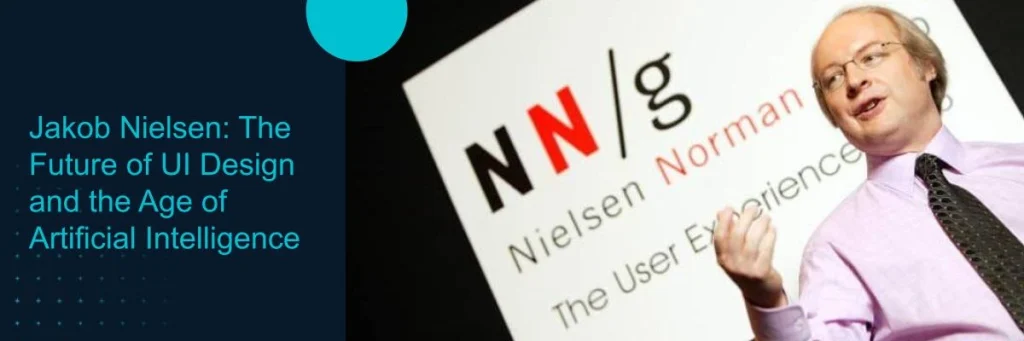
Jakob Nielsen, the father of web usability, said it clearly: “Graphical interface design will disappear as we know it.” A phrase that sounds almost apocalyptic, yet it marks the beginning of a new era — one where we no longer interact with screens, but with intentions.
For years, UI design was the visual language that allowed people to understand machines. It was the art of guiding users through icons, colors, typography, and well-structured flows. But AI came to flip the script. Now you don’t have to look for a button or follow a set path — you just say what you want, and an AI agent handles the rest. We’ve moved from clicking to conversing, from navigating to simply requesting. The user says, “Book a meeting,” “Adjust my budget,” or “Create a professional website,” and AI executes it. No menus, no friction, no screens.
The New Role of the UI Designer
The change doesn’t erase designers — it challenges them to reinvent themselves. UI design stops being about perfect buttons or structures and becomes an exercise in human understanding. Designers are no longer focused only on aesthetics; their job is to understand how users think, feel, and communicate, and translate that into experiences AI can interpret accurately.
Designing for Emotions, Not Just Screens
In this new landscape, the designer is a bridge between two worlds: the user’s world, full of emotion and context, and the world of artificial intelligence, driven by logic and data. Their work is no longer measured by what can be seen, but by what can be felt. Every interaction should feel natural, close, and trustworthy — even when there’s no visible interface. Because modern design isn’t about looking good, it’s about creating connection.
AI and Web Design: When Creativity Becomes Intelligent
AI in web design is no longer a distant promise. Today, tools like Midjourney or Figma AI can create mockups, suggest color palettes, and adjust layouts in seconds. But what’s truly revolutionary is AI’s ability to learn. Intelligent systems analyze user behavior, detect patterns, and adjust experiences in real time.
Designs That Learn and Adapt
As a result, every person can have a different version of the same website — one that adapts to their browsing habits, context, or even mood. UI design stops being a finished product and becomes a system in constant evolution. Designers no longer design for “the public” but for individual people.
Personalization Is No Longer a Luxury — It’s the Rule
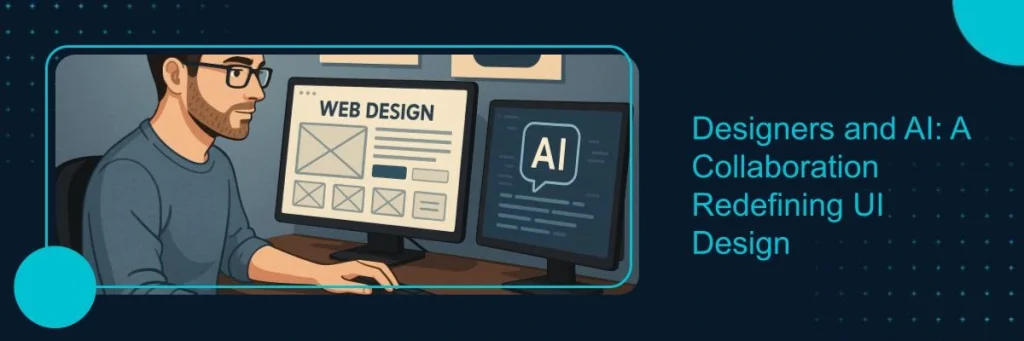
This level of personalization marks a turning point. It’s no longer a nice-to-have; it’s the new standard. And in the middle of this shift, designers are learning to coexist with AI as a creative partner — one that amplifies their creativity and redefines what we understand as a digital experience.
You Might Also Like: Design Sprint: How to boost your brand’s creativity
What’s Really Changing in UI Design With AI?
AI is redefining how we design and experience the digital world. Here are some of the biggest shifts already happening:
- Intention-based interaction: users don’t search, they ask. AI understands and acts.
- Invisible interfaces: the experience happens without screens but remains intuitive.
- Adaptive design: every user sees a different version of a product, based on context or habits.
- Radical accessibility: AI agents can tailor experiences for users with visual or cognitive limitations.
- Designers as strategists: less time on buttons, more time understanding emotion, language, and purpose.
This evolution doesn’t eliminate UI design — it makes it smarter and more human.
The Challenge: Designing Invisible but Human Experiences
Paradoxically, the more invisible the interface becomes, the more human the experience must feel. AI can execute tasks, but design still defines the tone, emotion, and connection. Users don’t want cold technology that just gets things done; they want experiences that understand their context. And that’s where UI design plays a key role — even when no screens are involved.
The challenge is to create conversational, natural experiences where AI acts seamlessly without taking control away from the user. Where design isn’t seen, but felt. Where technology works in the background, and everything simply flows. That’s the new frontier of UI design: invisible interfaces, full of intention.
So… Is UI Design Dead?
No — UI design isn’t dying; it’s changing its skin. Just as graphic design reinvented itself with the rise of web design, now interface design reinvents itself with artificial intelligence. The designer of the future doesn’t draw buttons — they design behaviors. They don’t create screens — they create experiences.
And the brands that understand this shift early won’t just adapt — they’ll lead. In a world where everyone has access to technology, the difference lies in how you make people feel.
Companies that still see AI as a threat are looking the wrong way. AI isn’t here to replace designers; it’s here to free them from repetitive execution so they can focus on what truly matters: strategic creativity, emotion, and purpose. In this new landscape, design stops being decorative and becomes a tool for human connection powered by technology.
Tuatara – Digital Marketing Agency
At Tuatara, we believe that UI design doesn’t disappear — it evolves. Artificial intelligence doesn’t replace human creativity — it enhances it. That’s why we help brands build digital experiences that combine strategy, design, and innovation without losing their human essence.
If your brand is ready to move beyond clicks and start creating intelligent experiences, now is the time.